

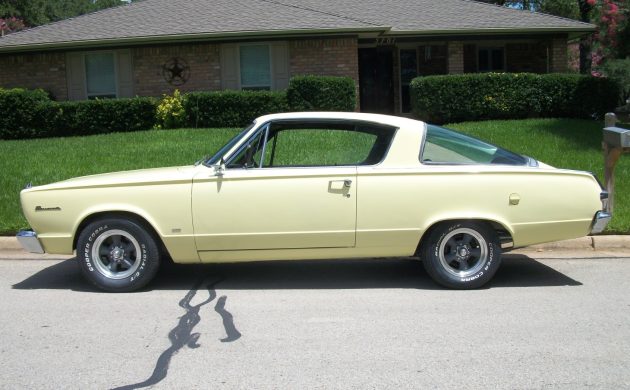
This 1966 Plymouth Barracuda is an almost “complete” package. It presents extremely well and features a new interior. However, the seller’s decision to slot an upgraded V8 under the hood gives it genuine performance credentials. The buyer faces a single task to complete the work commenced by the seller, and the parts to do so are included. I must say a big thank you to Barn Finder Curvette for spotting the Barracuda listed here on eBay in Arlington, Texas. The seller set their BIN at $22,000, and it appears that they may be fairly firm on that figure.
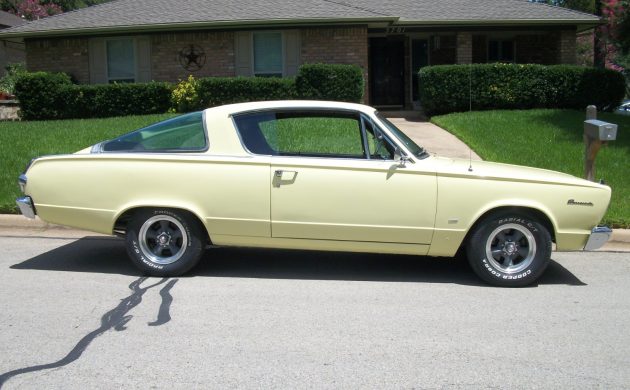
It is often said that timing is everything, and Plymouth’s Barracuda release could have been a masterstroke. It was the first genuine pony car, but it suffered enormously when Ford unveiled the Mustang two weeks later. The Barracuda should have commanded plenty of column inches in motoring publications, but couldn’t compete with the hype generated by the Mustang. That was a shame because, particularly in six-cylinder form, the Barracuda offered far superior performance to the Ford offering. This Plymouth left the line in 1966, looking extremely attractive in a subtle shade of Yellow. The first thing to note is that the car has split its years between New Mexico and Texas, and its dry climate existence has left it rust-free. The paint isn’t baked, and the panels are as straight as an arrow. It rolls on a set of relatively new American Racing Torq Thrust wheels, and most potential buyers will welcome the news that the deal includes a spare back window.
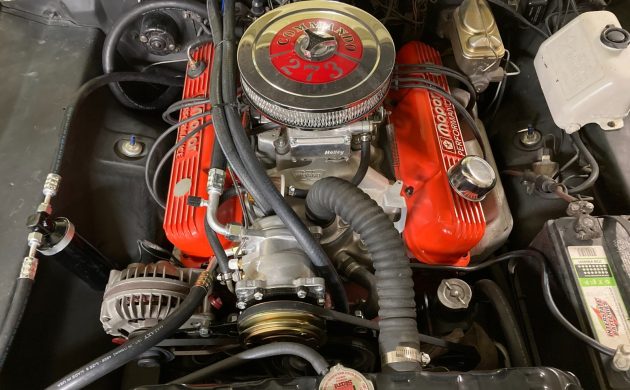
In six-cylinder form, the 1966 Barracuda held a significant performance advantage over an equivalent Mustang. The Ford placed 120hp at the driver’s disposal, while the Barracuda’s 225ci powerplant generated 145hp. However, the pendulum swung in favor of the Blue-Oval when buyers ordered a V8. This car’s original 273ci motor generated 180hp and 260 ft/lbs of torque, with both figures lower than Ford’s entry-level C-Code 289. Plymouth countered with a V8 delivering 235hp and 280 ft/lbs, but Ford trumped it again with its mighty K-Code. However, the seller has rendered those figures irrelevant by replacing the 273 with a 318ci motor, featuring a Holley intake, a 600 cfm carburetor, a camshaft from Competition Cams, and a dual TTI exhaust. Those improvements ensure that the 318 delivers a reliable and impressive 300hp. The power feeds to a limited-slip rear end via a four-speed manual transmission, while power steering and upgraded front disc brakes improve driver comfort and vehicle safety. The motor is fairly fresh, and the indications are that this Barracuda is a turnkey proposition.
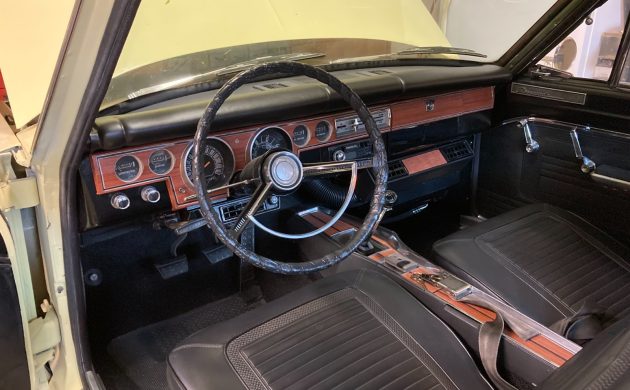
The positive vibes created by this Barracuda’s exterior continue when we open the doors and take a look inside. The seller performed a complete retrim, resulting in an interior that is virtually as-new. The exception is the headliner. The seller includes a new one sitting in the trunk, but the buyer faces the joy of installing it. Otherwise, this Plymouth’s interior needs nothing. The upholstered surfaces are perfect, the woodgrain is beautiful, and a sensible wrap protects the wheel. It would feel pretty luxurious, courtesy of the air conditioning, upgraded radio/cassette player, bucket seats, console, and the practical fold-down rear seat.
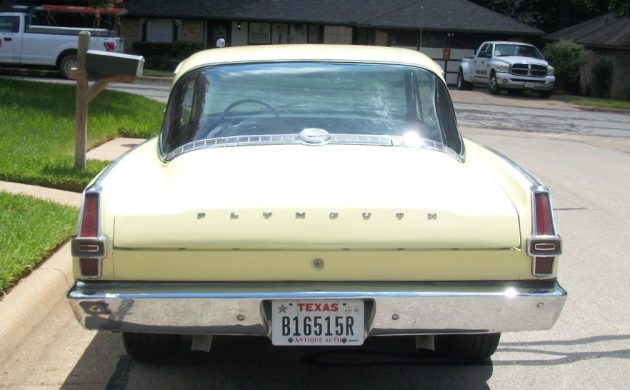
Although it isn’t an original survivor, that is no reason to dismiss this 1966 Plymouth Barracuda. It presents extremely well, and its interior makes a classy statement. However, the upgraded V8 could be the star of the show, offering performance its original creators could only have dreamed of. The seller’s BIN figure would be realistic if it were a genuine survivor or had been meticulously restored, but I believe that its rust-free status and the money invested in the build still make it worth the asking price. The Barracuda has generated respectable interest, and it will be fascinating to discover whether sales success results. What do you think?

I normally like most Barracudas,but I cringe when I see
a ’66.It has to do with a ’66 that I drove to make deliveries for
a local pharmacy.It was Light Blue,3 on the tree,6 cylinder.
Truthfully, I have little faith in any 318 putting out 300 hp, a 340 yes, but not a 318. Just my opinion, but it comes from 30 years of mopar insanity……
1hp per inch on a 318 is not hard to do, there’s been several high-profile projects that have done it that a search would turn up.
I’m with you. Not sure why they didn’t start with a 340 or 360. ?
At first glance, I was excited about this Barracuda. But the fact that it doesn’t have the original engine kind of spoils it. Always wonder what’s lurking under those steering wheel covers, too.
You can definitely get 300 HP out of a 318. Like everything else when you are dealing with a car, all it takes is time and money.
UAs the 318 was offered a year or 2 later, the outcry of indignation and sanctimonious dismissals weigh less for some of us who did exactly that with beaters that we found in the rearmost of some backwater backstreet old iron lot in rural America.
Many of us (especially yours truly) have often yelled “leave it alone!” with an original machine but as with everything we all look at the whole picture from our own perspectives..
You don’t see many of these around even at car shows!! Nice Barracuda!!
Perfectly stated nevada! Nice car hard to find a 4 speed
Lovely car. I haven’t seen one of this generation in a long time. My favourite gen has always been this and the 1968 Cuda.
My wife’s Aunt Jenny’s husband, Ralph, loved a yellow Barracuda same as this one. One day back in the 60’s he was changing the license plate where they lived outside of Baltimore when he had an attack and passed away. Jenny sold that car shortly after. We have photos of the car somewhere.
Very nice car . I like it . A/C box on drivers side limits your girl pick ups to slim in size……
Looked at eBay listing and that looks like a really nice car. A guy my brother went to school with had one that he put a 350/350 chevy combo in and instead of a shifter he had vice grips snapped on trans arm to shift, drove that way for years.
I’m a keep it stock type of guy and really prefer the 67′ to 69′ Barracudas the most, but if you don’t mind the mods and love this gen. of Barracudas it looks like a really nice car that you pretty much never see anymore.