

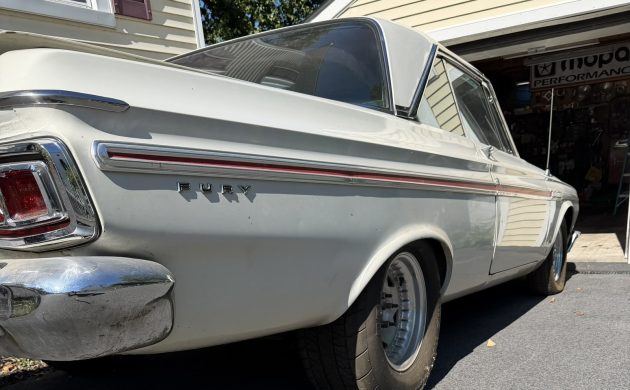
This 1964 Plymouth Fury hasn’t been registered since 2009. Still, there’s a lot to like about this classic. It retains its original paint, and life in a dry location has successfully protected it from the ravages of rust. Many people will believe the star of the show hides beneath the hood in the form of a 440ci V8 loaded with performance upgrades. The seller has listed the Fury here on eBay in Wappingers Falls, New York, with an asking price of $32,000 OBO.
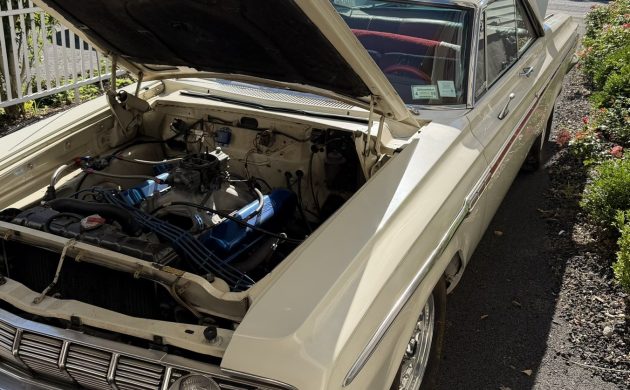
Plymouth adopted a policy of significant downsizing when it introduced the Third Generation Fury in 1962. Its predecessor had been a gentle giant, but sales proved disappointing. After restyling and physically enlarging its latest offering in 1963, sales increased, and 1964 marked the end of the line for that generation. This final-year example has spent much of its life in Southern California, a location with a climate ideal for classic steel preservation. Therefore, it is unsurprising that this beauty is rock-solid. Perhaps more impressive is the paint. The seller claims it is original, and the lack of deterioration suggests its owners protected it from long-term UV exposure. Since the panels are as straight as an arrow, performing a mild cosmetic restoration would be easy if the buyer wanted to lift its appearance. Some plated trim components show their age, but remain acceptable for a survivor-grade vehicle. The glass is clear, and the Plymouth rolls on an aftermarket set of Centerline wheels.
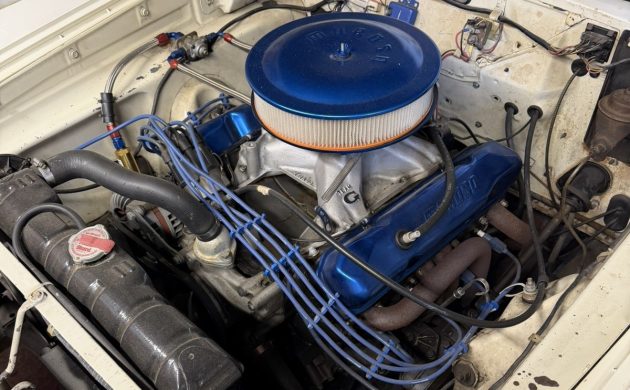
Lifting the hood reveals what makes this Fury genuinely special. The engine bay houses a 440ci V8, built by the seller’s father between 1991 and 1993. It features a steel crank, 906 cylinder heads, a Mopar 484/284 Purple camshaft, Mopar adjustable rockers, a Team G intake topped with a 750cfm carburetor, JBA headers, and a 2½” exhaust with no tailpipes. We can speculate about a potential power figure, but I believe it would have to at least nudge 375hp. There’s no point having mountains of power if the car can’t apply it to Planet Earth. This Fury does so via a three-speed TorqueFlite transmission, a 9½” 3500 stall converter, and a Dana 60 rear end with 4.10 gears. Although over three decades have passed since the build, the drivetrain combination has clocked only around 800 miles. It is unclear whether the Plymouth is genuinely roadworthy, but the embedded video in the seller’s listing features that magic motor running. It sounds silky smooth, with no smoke or odd noises.
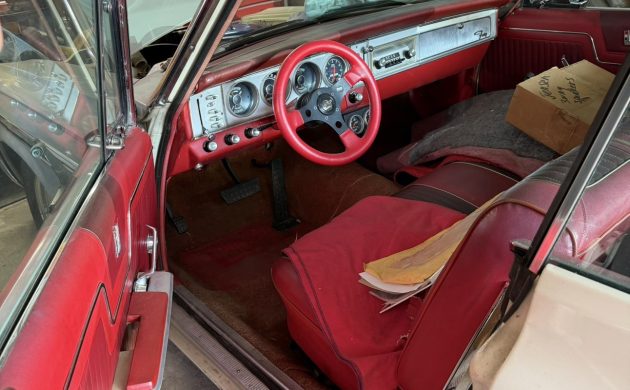
The originality of this Fury extends beyond the panels and paint, with the car retaining its factory Red and Black interior trim. The seatcovers look pretty tired, with a few rips and splits. The tops of the door trims show some deterioration, and the outer carpet edges show visible wear. However, the dash and pad look surprisingly good, with the factory pushbutton radio intact. Aftermarket additions include a Grant sports wheel, a dash-mounted tachometer, and an underdash gauge cluster. The interior isn’t pristine, but if the buyer wanted to improve it on a strict budget, slipcovers and mats would make a significant difference.
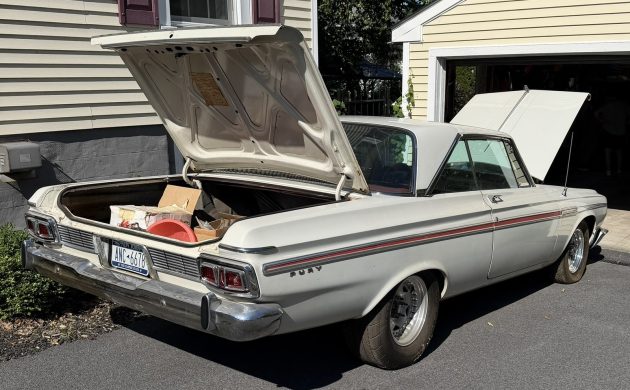
I’ve been pondering what I would do if I became the new owner of this 1964 Plymouth Fury. The lack of rust and panel imperfections makes it a prime candidate for a cosmetic restoration, but I don’t think I would go that route. I would probably detail the exterior within an inch of its life, and swap the existing wheels for steelies and dog-dish hubcaps. That would transform it into a survivor/sleeper that could spring a surprise off the lights and command respect at a Cars & Coffee with the hood lifted. That approach would also involve a minimal financial outlay, which some enthusiasts may find irresistible. Your dream may differ from mine, but are you tempted to make it a reality?

Over Priced.
Put your foot on the floor and steer.
lot of money and still needs a lot as well. it would be better if did not look modified.
The price seems high, but if the body and the rest of the car is as described it’s not too far off. It can be enjoyed as it sits and represents what a modified car in the early-90’s would look like. Not every car needs to be perfect, the idea that they do drives up prices making the hobby unaffordable, it guarantees cars won’t be driven and enjoyed. This would turn heads at local car shows, because it’s different and represents a point in time, without being overdone. The wheels look great and are correct for the timeframe the sellers father was working on the car.
I’d swap out the steering wheel with an original one.
Steve R
For work I had to sell my beloved 64 Monza convertible for a used 64 Fury 9 passenger wagon 318 in 1969. It already had rust in the usual places coming from Massachusetts. I moved to Alabama for work and kept it until 1975 when I traded it for a paint job on my truck. It was a steady reliable car. The rust went no further. I bought a new Volvo 145. We called the Plymouth Super Car. The Volvo not so much.
If it didn’t have the sporty trim and the hardtop design, I might agree with you on the wheels. I personally think that the Magnum 500 wheels would look very nice on this instead. I always liked the look of these Fury models – someone will be a happy camper with this one!
I agree with your choice of steelies and dog dish caps….that grant steering wheel would have to go though, and a nice original wheel would have to be sourced…seems totally out of place in a car like this.
Unless they are going for a red white and blue theme, I’ve got to say I’m not a fan of the blue air filter cover and valve covers.
800 miles 1/4 mile at a time. The rear tires look like drag radials to me ! I have always liked this body style. And if mine, it would see some more 1/4 mile trips!
Figure 1 1/2 to 2 miles per pass, plus whatever the distance to and from the track, then add on any street miles, that is if the car was raced extensively. This is a pretty mild combination, something you would see in the street class in a Wednesday night rather than a dedicated race car.
Steve R
Bracket racer!
Alright car but too expensive . I think an Indian blanket would improve upon the seat covers that’s on it .
I love the “motor is silky smooth” comment. The Mopar Performance Catalog lists the Purple Stripe Cam as “Drag race only, not suitable for street use.” The 383 in my 65 Belvedere has one, the idle is rocky at 800 – 900 RPM. I admit that it is smooth above 2500 RPM. It doesn’t hurt the bottom end torque too much, it will spin the tires whenever you want. If you can afford that.
It needs a minimum of a 2800 RPM stall torque converter, with a stock converter the motor will stall if you leave it in drive at a stoplight. With that cam and the 3500 RPM converter this one will be great for drag strip launches but not a lot of fun driving through town.
My car has been on a rotisserie and I haven’t had enough guts to add up what I paid the local Mopar Man for the paint job, so it goes to shows and sometimes up through town on a nice day. We get 20 nice days a year . . . . .
The purple stripe cam and 2800 stall converter are tolerable for that, but after a few stoplights I get tired of it. But when you pull into a car show with a Mopar big block with that radical cam, a crowd will usually gather to see what it is. That part is more or less worth it.
If I bought that car for $32,000, the very first thing I would do is go have my head examined. The second thing is, I would throw that Grant steering wheel in the trash.