

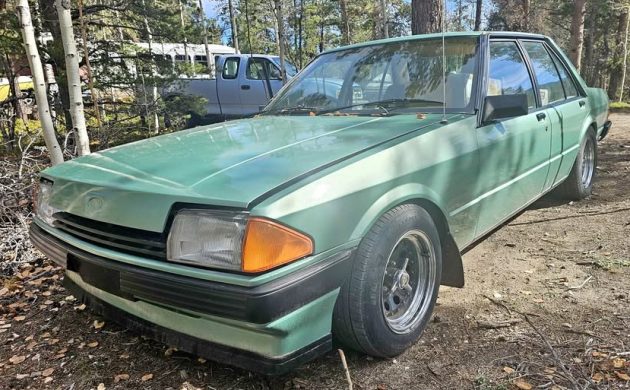
From 1960 until the last cars rolled off the line in 2016, the Falcon was the backbone of Ford Australia’s product range. Although the company dabbled in Two-Door Hardtops at various times, the Sedan was the popular choice among buyers. This 1983 XE Falcon is the sporting S Pack variant, and with a healthy 460ci V8 under the hood, it should deliver performance beyond the company’s imagination. It needs work to look its best, but options are available for buyers willing to be patient. I must say a big thank you to Barn Finder Rob for spotting the Falcon listed here on Facebook Marketplace in Erie, Colorado. The seller set their price at $18,900, and while that isn’t cheap, its relative rarity in North America makes it worth a close look.
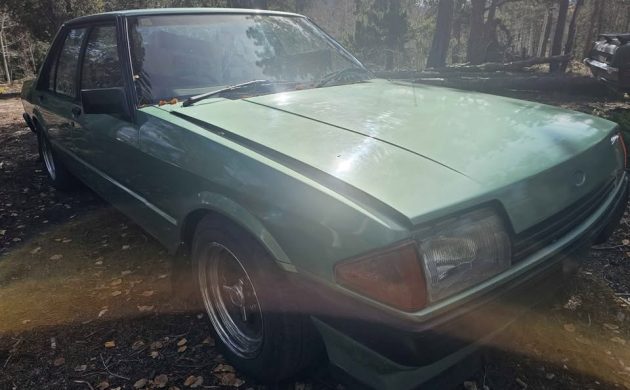
Ford Australia released its Fourth Generation Falcon range in 1979, choosing crisp styling with a distinctly European influence. Marketed as the XD, the company unveiled the updated XE model in 1982. Ford offered buyers a Sedan, Station Wagon, Panel Van, or a “Beaut Ute.” External changes that differentiated the XE from the XD included a new hood with a drooping nose, updated bumpers, and minor trim changes. However, Ford invested heavily beneath the skin, replacing the rear leaf-spring suspension with coils and a Watts Link to improve ride and handling. The seller describes this 1983 Falcon as an S Pack, the more sporting model. It has the correct Black plastic extension on the front spoiler but is missing the stripes, badges, and fog lights that were integral to the package. The poor image quality makes assessing the overall condition challenging, but its Jade Green paint retains a healthy shine. The panels are straight, and if there is no rust in the lower rear quarter panels or around the back window, it could be a winner. I noticed that the car is missing a couple of small trim pieces, and one taillight is cracked. However, a company called Rare Spares in Australia stocks high-quality reproduction parts, and I know they will happily ship internationally.
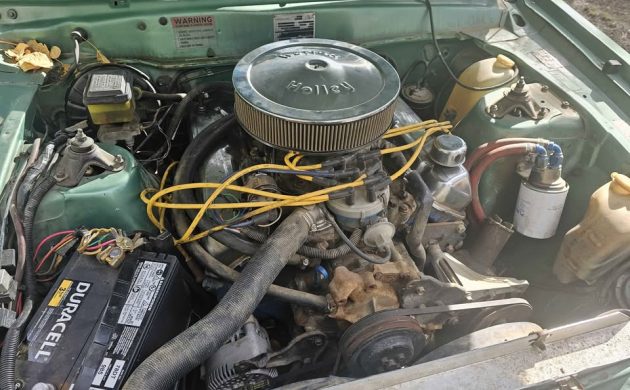
Although Ford updated the suspension when it released the XE and tweaked the engines with better carburetors, most mechanical components from its predecessor remained beneath the Falcon’s skin. Buyers could choose from carbureted versions of the 3.3-liter and 4.1-liter six, or a 4.9-liter or a 5.8-liter “Cleveland” V8. The company made what many believed was a strange decision at the end of 1982, withdrawing the V8 option from the Falcon range. They replaced both motors with a fuel-injected version of the 4.1-liter six, and while its power and torque were significantly better than the carbureted motor, it wasn’t as effortless as the great V8. Ford Australia justified the change, citing reduced sales volumes, but with the car engineered to accept the Cleveland and the company continuing V8 production for the export market, leaving those engines on the options list would have made sense. Therefore, even with the injected six, the best this Falcon would have originally offered its first owner was 149hp and 240 ft/lbs of torque. The seller has made that largely irrelevant, ditching the original powerplant in favor of a 460ci V8. It has 10.25:1 compression, is balanced, and features an upgraded camshaft, intake, and carburetor. We can only speculate on its output figures, but it should be quite lively. The 460 sends power to the rear wheels through a three-speed C6 automatic transmission, and the car also has power steering and four-wheel power disc brakes. The seller describes the Falcon as a fun, dry-weather driver, suggesting it is a turnkey proposition. Interestingly, while the V8 disappeared at the end of 1982, the Falcon continued to feature the 5.8-liter motor in Group C Touring Car Competition until the end of 1984. It created one of the most iconic moments in Australian motorsport history in 1983 when Dick Johnson crashed during that year’s Bathurst 1000 Top Ten Qualifying Session. You will find the lap and its aftermath in this YouTube video. The sound of the 351 at full noise is spine-tingling, and I know many readers who watch the footage will be amazed that, once the Falcon came to rest after cutting a “fire trail” through the trees, Dick Johnson released his racing harness and climbed out largely unscathed.
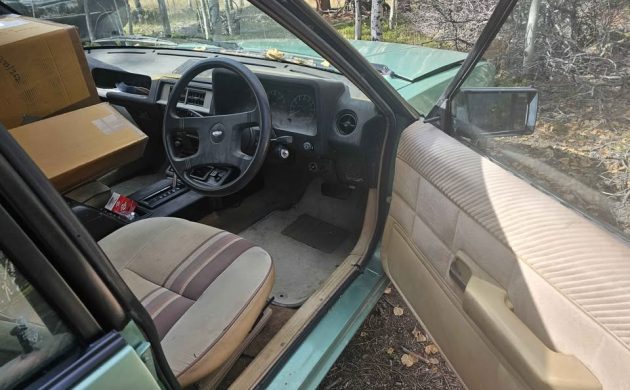
As with the exterior, assessing this Falcon’s interior condition is challenging from the single, poor-quality image. However, it features the correct cloth seatcovers with the distinctive stripe, and the S Pac gauge cluster with a tachometer and gauges for fuel level, water temperature, oil pressure, and volts. Interestingly, the first owner ordered this car with power windows, which is a surprisingly rare option. I believe that it may also retain its factory AM/FM radio. If there are no rips or splits in the upholstery, the interior might look good after a deep clean. I recommend fitting slipcovers if the buyer plans to use it regularly. The unique seat upholstery is no longer available, so it’s wise to protect the existing trim.
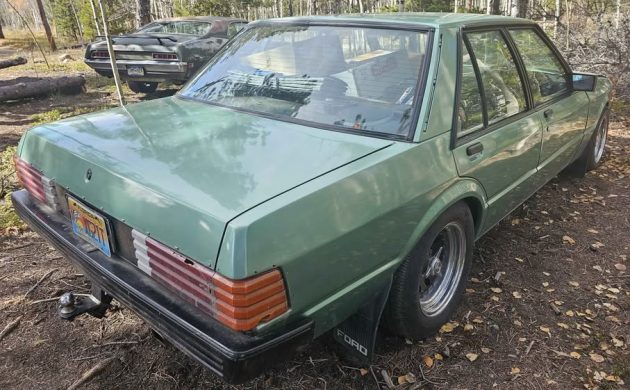
I wouldn’t typically describe the Ford XE Falcon as rare, with 193,890 examples rolling off the line before production ended in October 1984. The Falcon became Australia’s highest-selling passenger car in 1983 and remained so until 1988. While the overall production total is impressive given Australia’s population, the Falcon’s affordable sticker price and robust nature worked against it. Owners often drove their Falcons into the ground, and a surprising number were used in dirt track speedway competition. It is now extremely rare to see one of these classics on Australian roads, and scrolling through the archives confirmed this is only the third XE we’ve seen at Barn Finds. Interestingly, the other two were still Down Under, making this the first we have seen on local shores. Therefore, if you are willing to pay the price, you could drive away in a practical, potent classic that could easily be unique at any Cars & Coffee.
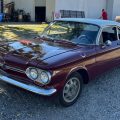
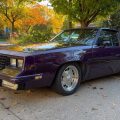
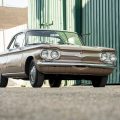

Say the word “Falcon” to most readers, and images of Fords economy car come to mind. Seems the original 1960 Australian Falcon pretty much looked like ours, mid 60’s started to add different grills and by 1970, was completely unrecognizable, almost Torinoish. A 460 in a car say, the size of a Granada, sounds a bit ominous, but hooligans are apparently worldwide, thanks to the internet. Looks like a nice car, but that steering wheel location is all wrong,,, :)